
It wants subscribers who are 'active' on its network.

As trade pundits predicted, tariff hikes are going to be slow and steady unlike the domino effect caused in 2009, when even established operators went into a frenzy and slashed tariffs to hold back subscribers.
The books of these companies had come under a cloud after it was alleged that many of them had not been paying the goverment's share of revenue by showing the revenue earned under other categories. Under a suggestion of the Telecom Regulatory Authority of India, a special audit of all the integrated telecom companies will be undertaken once in 3-5 years.
The telecom tower-transmission business is going to see a shake-up with cash-rich and independent companies moving in with aggressive plans.

Leading telecom service provider Bharti Airtel has urged the government not to change existing spectrum allocation criteria and to continue with the additional 2G spectrum allocation policy based on subscriber figures.
The onus of the tax dues of Rs 22,100 crore on Vodafone India's British parent could also fall on the merged entity.

CDMA operators on Tuesday slammed a report of the DOT spectrum committee on airwave allocation, saying it is 'highly inclined' in favour of the GSM operators.
Solicitor General of India Goolam Vahanvati has said no further allotment of spectrum beyond 6.2 MHz should be made to telecom operators till the report of the committee on its pricing and allocation is received.If the opinion is acted upon, it would affect companies like Bharti Airtel, Vodafone, Reliance Communications, Idea Cellular and Aircel, which have applied for extra spectrum in other circles.
Spectrum refers to the radio frequencies that enable wireless communication. It has been the source of a bitter dispute between mobile operators of the rival GSM and CDMA technologies. In its petition, Tata Teleservices has also demanded immediate allocation of spectrum that is under the contractual obligation in areas in which it has fulfilled its subscriber base criterion.
The Department of Telecommunications has called a meeting of the heads of all leading telecom companies offering GSM technology services on November 21 to resolve contentious issues that have arisen following recent changes in telecom policy.

Leading telecom players like RCom, Tatas, Vodafone and Idea Cellular failed to bag a single circle for Broadband services, saying the BWA spectrum price was too high to make a viable business case.

Every service provider, say analysts, now needs to make a much larger investment, and therefore needs a much larger share of the market to be profitable.

Operators Bharat Sanchar Nigam Ltd, Bharti Airtel, Vodafone-Essar, Aircel, Mahanagar Telephone Nigam Ltd and Idea Cellular might have to fork out over Rs 11,200 crore for having spectrum beyond 6.2 MHz, if the government accepts the Telecom Regulatory Authority of India (Trai) recommendations.

BSNL, Tata Teleservices and Reliance Communications, who also provide GSM technology-based services, are not part of the report.
Communications Minister A Raja on Monday told Parliament that there was no "contractual agreement" between government and telecom operators to allot spectrum beyond 6.2 MHz, a move that could hurt GSM players like Bharti, Vodafone and Idea Cellular. Raja also ruled out auctioning of spectrum saying this was not feasible based on previous experiences, especially in 1993 when operators were not able to fulfill their roll out obligations.
In his letter dated October 19, Anil Ambani points out that while the top three GSM players -- Bharti, Vodafone-Essar and Idea Cellular -- have acquired an additional 52 million subscribers in the past few years without allocation of any additional spectrum, something they have constantly told the government that they do not have sufficiently.
"There is no contractual agreement to give spectrum beyond 6.2 MHz. We are releasing more spectrum based on subscriber base as suggested by telecom regulator Trai," Raja said in the House while replying to a question. Spectrum is radio frequency used for offering wireless telecom services. Currently, spectrum allocation norms, which were revised in August 2007, are being followed while the Teleconm Enginering Centre report is awaited.
The adjusted gross revenue (earnings from sale of telecom services) of the top three telecom companies in India - Bharti Airtel, Vodafone India and Idea Cellular declined by 7.98 per cent, 5.14 per cent and 4.91 per cent respectively during third quarter of 2016-17.
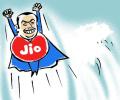
The incumbents Bharti Airtel and Vodafone Idea recorded adjusted gross revenue of Rs 10,701.5 crore and Rs 9,808.92 crore, respectively, during the quarter.

Telecom Minister Ravi Shankar Prasad said that there were 31 complaints of call drops against the company in 2015

As per the latest data released by Telecom Regulatory Authority of India (TRAI), Vodafone Idea -- born last year from the merger of older operators Vodafone India and Idea Cellular -- continues to be the largest operator with 38.75 crore consumers and 33.36 per cent market share in the wireless segment as on May 31, 2019.

Airtel, Vodafone, BSNL increase subscriber share while Idea manages to retain

The Department of Telecom may bar operators holding 3G airwaves from sharing the high-speed spectrum.

Bharti Airtel has paid Rs 11,374.7 cr while upfront amount due from it was Rs 7,832.20 cr

Airtel, Vodafone, Idea, RCom, Reliance Jiosubmitted applications.

The minister said the companies have given representation which is being examined by the DoT before taking a final decision.

Jio says it has completed mobile number portability testing and is certified MNP-compliant

Telecom major Bharti Airtel led the growth in segment with net addition of 1.31 million subscribers.

Active subscriber base declined by 2.2 million on a month-on-month (MoM) basis to 970.2 million in August 2019, on the back of Bharti Airtel and Vodafone Idea losing customers. Jio was the only operator to add 7.2 million active subscribers in the same month.

According to BSE, Bharti Airtel's revenue (on a standalone basis, excluding that from foreign operations and their subsidiaries) stood at Rs 49,919 crore (Rs 499.19 billion).

Demand for 1,800-MHz weak but govt secures a combined Rs 42k cr on Day-1

Analysts expect structural risks such as risk to voice revenues, steep correction in data realisations, capex spend and rise in churn and subsequent increase in costs to continue in the medium term
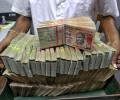
A total of 41 companies had applied for the permit

Given the escalating cost of doing business, the revenue opportunity is decreasing and consolidation is an inevitable part of the industry.
The company has increased the cost of 1 GB of 3G internet usage to Rs 156 from Rs 123 it charged earlier.

Analysts believe making mobile data more affordable will fuel mass market adoption of data services

Currently, MNP is only available within a state/circle.

The recent Indian telecom spectrum auction will hasten industry consolidation, strengthen tariffs and reduce regulatory risks.

Mobile phone service providers alone jointly reported gross revenue of Rs 55,164.18 crore (RS 551.64 billion).
 © 2026 Rediff.com - Advertise with us - Disclaimer - Privacy Policy - Sitemap - Feedback - About us - Terms of use - Grievances